Garden Care and Safety
A Wildlife Garden
Turn a corner of the garden into a wildlife patch: nectar flowers, a log pile, a shallow water dish and the birds, bees and hedgehogs children can watch.
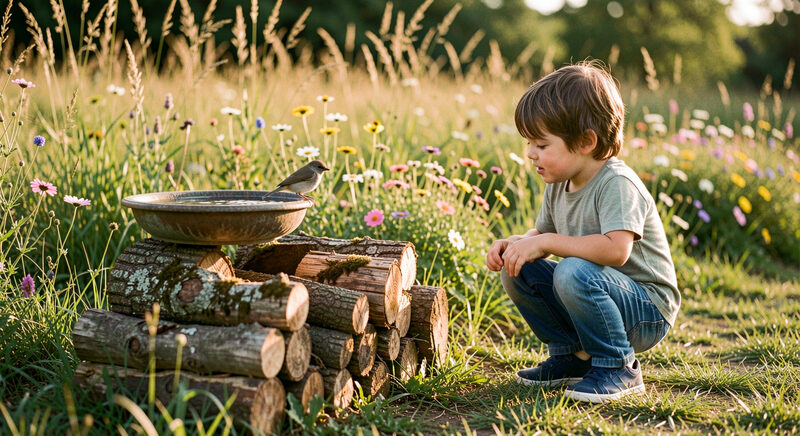
A wildlife garden is a corner of the plot left a little wilder than the rest, and it is one of the best places to put a child with a pair of binoculars and a notebook. It takes very little space and almost no money, and it repays the effort every day of the year with birds, bees, butterflies, beetles and, if you are lucky, a hedgehog. This guide covers the plants, the log pile, the water and the watching.
Why a wild corner helps
A tidy garden with clipped edges and bare soil offers wildlife little to eat, drink or shelter in. A wild corner reverses that: flowers for nectar, seed heads for birds, dense cover for nesting, damp shade for frogs, and dead wood for beetles and fungi. The same corner also helps the vegetable beds, because the predators that live in it, from ground beetles to hedgehogs, eat garden pests. A wildlife patch is not a sacrifice of productive space; it is part of it.
Children understand the idea quickly when it is framed as making a home for something. Give the patch a name and a marker, and let the child own it.
Flowers for nectar and seed
The simplest way to start is with flowers. Choose single, open flowers rather than double ones, because double flowers often have no nectar for insects. Good choices include lavender, oregano, thyme, marjoram, foxglove, borage, cornflower, cosmos, sunflower, sedum, and wildflowers such as knapweed and field scabious. A patch of mixed wildflower seed is cheap and brings in a wide range of insects, though it may take a season to establish.
Leave the seed heads standing into winter instead of cutting everything back in autumn. Sunflower and teasel heads feed birds, and hollow stems give insects somewhere to shelter. A garden that is left slightly untidy over winter is a garden that has more life in it the following spring.
A log pile and a dead hedge
Dead wood is one of the richest habitats a garden can offer. Pile a few logs, branches and cut stems in a shady corner, with the largest at the bottom, and leave them. Beetles, centipedes, woodlice, fungi and, in time, slow worms and frogs will move in. A dead hedge, made from prunings stacked between two rows of stakes, does the same job and uses up garden waste that would otherwise be burned or taken away.
Site the pile where it will not dry out completely and where a child can watch it without disturbing it. Turning a log over to see what is underneath is a good supervised activity, but the log should be put back as it was, because the creatures on the underside need the damp.
Water, safely
Wildlife needs water, but an open pond is a drowning risk for small children. The safe compromise is a shallow dish, a bird bath, or a sunken tray with a gently sloping edge and stones for a way out. Keep it topped up in dry weather, and clean it out now and then. A shallow dish on the ground gives hedgehogs and birds a drink, and a raised bird bath keeps the water out of reach of cats. If the family wants a proper pond, fence it or cover it with rigid mesh while children are small, as the guide to garden safety explains.
A small dish of water also gives a child a daily job, which is one of the best ways to build a habit of watching what visits.
Homes for birds and insects
A nest box on a wall or a tree gives birds a place to raise young, and a bug hotel made from stacked pallets, bamboo canes, bricks and dry leaves gives solitary bees and other insects somewhere to shelter. Keep the bug hotel in a sunny spot and the nest box out of the prevailing wind. Do not disturb a nest once it is in use, and clean boxes out in late winter, not in spring.
A hedgehog house, a low box with a tunnel entrance and dry leaves inside, may be used over winter if the garden is quiet and there is a way in and out under a fence. A small gap at the base of a fence, about thirteen centimetres square, is enough for a hedgehog and too small for most pets.
A year in the wild corner
The wild corner changes through the year, and each season gives a child something new to notice. In spring, the first bees and butterflies arrive on the early flowers, birds begin nesting, and frogs return to the damp corner to spawn. In summer, the patch is at its busiest, with insects on the nectar flowers and birds feeding young in the nest box. In autumn, seed heads ripen and birds feed on them, and hedgehogs look for a place to settle. In winter, the log pile and the dead hedge shelter insects, and a well stocked bird table keeps the garden alive with visitors.
Leave the corner largely alone through the winter. Cutting everything back in autumn removes the seed heads and the shelter that make the patch work, and it leaves nothing for the creatures that use it. A garden that looks slightly untidy in January is a garden that will be full of life in May, and that is a lesson worth showing a child.
Watching and recording
The watching is the point of the whole project. Keep a small notebook and a pencil in the patch, and record what is seen and when: the first bee of the year, a bird on the sunflower head, a frog in the damp corner. A child who keeps a list for a season learns more about the natural year than any worksheet, and the list becomes a record of their own garden. The hub on garden care and safety sets this page beside the other work of tending a family garden, from slug control to safety checks.