Growing with Children
Growing Vegetables in Containers
Grow food without a garden: the pots, compost and crops that suit containers and window boxes, with watering, feeding and the vegetables that stay small.
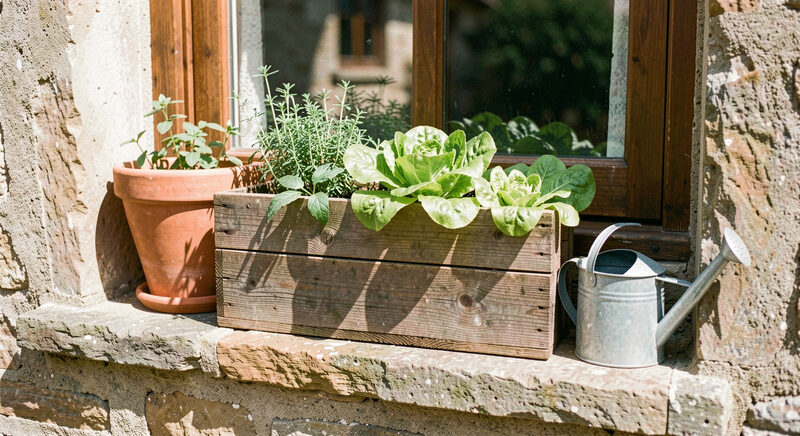
A garden is not essential to growing food with children. A balcony, a doorstep, a windowsill or a strip of paving can carry a surprising amount of produce, and containers have one real advantage: a child can reach them, move them, and see exactly what is happening at root level when a pot is tipped out. This guide covers the pots to choose, the compost to fill them with, the crops that suit container life, and the watering and feeding that keep them going.
What counts as a container
Almost anything that holds soil and has drainage will work. Terracotta pots, plastic pots, wooden window boxes, fabric grow bags, old buckets and half barrels all do the job. The important points are size and drainage. A container needs holes in the base, and the bigger the volume of compost, the more forgiving it is: a large pot dries out slowly and gives roots room, while a small one can dry out in a single warm afternoon. For most vegetables, aim for a pot at least thirty centimetres across and thirty deep.
Light matters as much as size. Most vegetables want six hours of sun a day, so a north facing sill will grow salad leaves but not tomatoes or beans. Watch where the sun falls before filling anything, and move pots through the season if the light shifts.
Compost and drainage
Use a bought potting compost rather than garden soil, which compacts in a pot and carries weeds and pests. A peat free multipurpose compost suits most crops. Put a layer of broken crocks or gravel in the base of a large pot to stop the holes blocking, then fill to within a few centimetres of the rim so there is room to water. Mix in a slow release fertiliser at planting time, or plan to feed with a liquid feed through the season, because compost in a pot runs out of nutrients after about six weeks of growth.
Crops that suit containers
Not everything grows well in a pot. The best choices are compact, productive and tolerant of drying out now and then. Loose leaf lettuce, radishes, spring onions, herbs, dwarf French beans, peas, chard, cherry tomatoes and strawberries all do well. Carrots can work in a deep container if the compost is stone free. Potatoes are excellent in bags, as the guide to growing potatoes in containers explains, because the bag makes the harvest easy to find.
Crops to avoid in small containers include full size courgettes, maincrop potatoes and anything that needs a lot of root room, unless the pot is genuinely large. A single courgette plant will grow in a half barrel, but it will drink heavily and needs daily watering in summer.
Window boxes and shallow planters
A window box is a shallow container, often only twenty centimetres deep, so it suits shallow rooted crops: lettuce, herbs, radishes, chard and strawberries. Line the box with a couple of centimetres of gravel, use a light compost, and water carefully, because a shallow box dries fast. Fix the box securely, and check that water drains away from the wall rather than staining it. A box on a sunny sill is a fine place to raise a few seedlings before planting them into bigger pots.
Watering, the main job
Containers need more water than open ground, and the smaller the pot, the more often it needs attention. In warm weather, check every day by pushing a finger into the compost: if it is dry a centimetre down, water until it runs from the base. Water in the morning where possible, so the plant has moisture through the heat of the day, and never let a pot sit in a saucer of standing water, which rots the roots.
A child can take charge of a small set of pots, and the routine of checking them teaches the same lesson as a bigger bed: that a plant depends on someone noticing it. Keep the cans light enough to carry, and put the pots where a young gardener can reach them without climbing.
Feeding and keeping plants going
Start with a slow release feed in the compost, then add a liquid tomato feed once a week from the moment the first flowers appear on fruiting crops such as tomatoes, peppers and courgettes. Leafy crops need less feeding and more water. If leaves turn pale or growth stalls, the plant is usually hungry or root bound; tipping it out will show which.
Turn the compost over between crops, remove old roots, and refresh the top few centimetres before replanting. A pot that has grown a heavy crop will be tired, and a small top up of fresh compost and feed gives the next sowing a fair start.
Overwintering and the quiet months
Containers are easy to put away, which makes them ideal for a family that gardens in bursts. In autumn, clear spent crops, wash the pots and store them dry. A few pots can be kept working through winter with garlic, winter salad or a hardy herb. Children who helped fill and plant the pots in spring will often want to know what happens to them in the cold, and showing them a stored, clean pot is a good way to close the year. The wider hub on growing with children places container growing alongside beds and window boxes as one of the ways a small space can still feed a family.